Showing posts with label Birds. Show all posts

Sunday, February 3, 2013

Common Sandpiper


Animal You | Common Sandpiper | It is gray-brown back and white belly short dark yellowish legs and feet, and an invoice with clear and dark spot. Young people are strongly against and polish edges excluded to the feathers of the wings. This species is very similar to the slightly larger plumage Spotted Sandpiper (A. macularia) in nonbreeding. It's a friendly bird and is seen in large flocks, and has the characteristic rigid wings fly low over the water, wade Actitis. The Sandpiper breeds in most temperate and subtropical regions of Europe and Asia, and migrates to Africa, South Asia and Australia in winter. The eastern edge of their migration from Palau in Micronesia, where you can collect hundreds of birds for a stopover.


The view Sandpiper foraging on land or in shallow water, picking small food such as insects, crustaceans and other invertebrates, but they can also catch insects in flight. In the language of Nukumanu Nukumanu Islands (Papua New Guinea), this species is generally considered tiritavoi. The reason for this is that matakakoni means" bird walk around ", and then in pairs" in relation to the movements of the head and tail pumps Actitis urge species typically performed during the collection. 

Find Animal You
READ MORE - Common Sandpiper

Loon


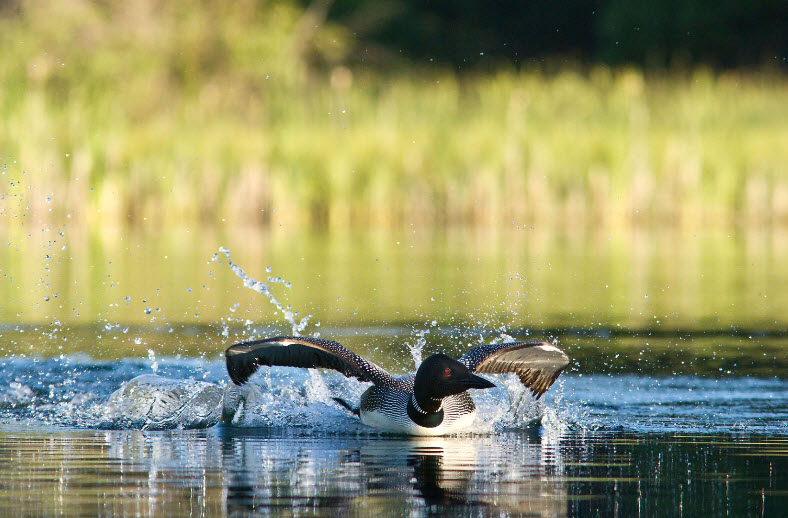
Animal You | Common Loon | Adults, 61 to 100 cm (24-40 inches) to go with 122-152 cm (4-5 feet) wingspan slightly smaller than the similar Yellow-billed Loon (or "Diver white"). Breeding adults have a black head, white belly and a white coat and white checkered. Beak color and angle distinguish this species from Loon same account. Setting: A series of strong bones (as opposed to the normal flu cable bones), which gives weight to help, but, diving Loons breed in North America, Greenland, Iceland and Scotland. This species winters on the coast of the sea or large lakes in southern Europe and the U.S., and southern areas of the North West. This species, like all divers, is a specialist fish-eater, their prey underwater, diving depth to capture up to 200 feet (60 m). Supplies drinking water for pike, perch, sunfish, trout and bass saltwater systems consist of rock fish, flounder, sea trout and herring. The bird needs a long distance to gain momentum for take-off and landing is bad. Loon swimming gracefully on the surface, diving and all the flight of birds, flying skills, and hundreds of miles of migration.


Loon nests are usually placed in the islands, where predators of land can not access normally. However, eggs and nestlings of gulls, crows, raccoons, skunks, mink, foxes, turtles and large fish triggers were taken. Osprey observed kleptoparasitism sub harassment rather than plunder. Both parents build the nest, sitting on the egg or eggs and feed their young. These birds have disappeared from some lakes in North America due to the effects of acid rain and pollution and poisoning from lead fishing sinkers and mercury contamination from industrial waste. Floating artificial nesting platforms were provided for loons in some lakes to reduce the impact of water levels that change from dams and other human activities.


Moreover, it is the state bird of Minnesota. Voice and the look of the loon was performed in several stories of Native Americans. The popular names include big loon, black-billed loon, call a storm, glow-goose Greenhead, Imber guinea duck, ring-necked loon and Wallonia. This bird is the focus of the plot of the novel Great Northern? by Arthur Ransome (the reference in the Great Northern Diver, made with Colymbus obsolete scientific name always). The story is set in the Outer Hebrides, where the main characters in a group of children during the holidays seems a pair of loons nest notice.  

Find Animal You
READ MORE - Loon

Thursday, January 24, 2013

Snowy Owl


Animal You | Snowy Owl | This yellow eyes, black billed white bird is easily recognizable. Moreover, these birds between 1.6 to 3 kg (3.5 to 6.6 pounds) predominate. This is one of the largest species of owl in North America and on average the heaviest owl species. The male is almost pure white, but females and young birds have a little dark scallops are excluded young people mostly, and dark spots can even outweigh. Its plumage often strong feet with feathers, paint and make the Snowy Owl north for life the Arctic Circle dug well adapted. Snowy Owl calls are varied, but the alarm call is a barking, almost quacking Krek-Krek, also has a soft meow Pyee Pyee or PreK-PreK. This species of owl nests on the ground, building a scrape on top of a mountain or rock. Gravel bars and abandoned eagle nests may be used. The female scrapes a small space prior to spawning.


Both the male and the female defend the nest and their young from predators, sometimes disturbing screens. This powerful bird relies primarily on lemmings and other small rodents for food during the breeding season, but in times of low prey density or during the ptarmigan nesting period, they may change in favor of young grouse. They are opportunistic predators and prey can vary greatly, especially in the winter. They eat a variety of small mammals such as mice and rats, prairie deer, but get larger prey, often found on traplines for food. Some of the larger mammal prey includes rabbits, muskrats, marmots, squirrels, rabbits, raccoons, prairie dogs, mice, moles, and entrapped furbearers. Prey Birds include ptarmigan, ducks, geese, shorebirds, pheasants, partridges, coots, grebes, gulls, birds and birds of prey, including other species of owls.


Snowy Owls, like many other birds, swallow their small prey whole. Biologists frequently examine these pellets, the amount and type of prey the birds have eaten determined. If you eat large prey into small pieces, pellets will not occur. During the breeding season, the owls regularly defend their nests against arctic foxes, ravens and rapid flight Jaegers and dogs, gray wolves and birds of prey animals. Males defend the nest guard near, while the female incubates the eggs and young larvae. Directly compete lemmings and other prey of predators, including Rough-legged hawks, eagles, falcons, hawks, falcons, Jaegers, gulls, glaucous, short eared owl, Eurasian eagle owls, ravens common, wolves, arctic foxes and stoats. Some species nest near Snowy owl nests, such as the snow goose seem incidental benefit from the protection of snowy owls, the competing predators drive out of the area. 

Find Animal You
READ MORE - Snowy Owl

Friday, January 18, 2013

Blue Jay


Animal You | Blue Jay | The Blue Jay measures 22-30 cm (9-12 inches) of the bill to tail and weighs 70-100 g (2.5-3.5 oz), with a wingspan of 34-43 cm (13-17 inches). When frightened, the crest bristles outwards shaped brush. When the bird feeds among other jays or resting, is flattened at the top of the head. Its plumage is lavender-blue to mid-blue on top, back, wings and tail, and his face was white. The primary wings and tail are excluded with black, blue and white. Males and females are almost identical. As most of the birds blue tones of blue color pigments derived Jay, but is the result of the interference of light by the internal structure of feathers as a blue pen is ground, the blue disappears as the structure is destroyed.


The Blue Jay comes from southern Canada through the eastern and central U.S. south to northeast Florida and Texas. The western end of the ridge, where it stops the dry forest and scrub species Steller's Jay (C. stelleri) begins. Recently, the range of the Blue Jay northwestern extended so now is a rare winter visitor, but regularly seen along the U.S. northern and southern Pacific coast of Canada. Since the overlap of the two species, since, C. cristata sometimes hybridize with Steller's jay. Miles of tiles were observed in herds migrate along the Great Lakes and the Atlantic coast. A large part of their migratory behavior remains a mystery. Jays youth are more likely to migrate than adults, but many adults migrate. Some individuals jays migrate south one year, continue north to the next winter, then migrate south again next year.


The Blue Jay occupies a variety of habitats within its range, from the pine forests of Florida to the spruce forests of northern Ontario. It is less abundant in the dense forests, preferring mixed forests of oak and beech. The Blue Jay is a passerine strong, brave and aggressive. Almost all raptors sympatric distribution with Blue Jays may precede, especially specialists hunting birds like hawks Accipiter quickly. Several predators may precede the eggs and young Jay in its infancy, including squirrels, snakes, cats, crows, raccoons, opossums, jays and perhaps many other raptors same attack adults. Blue jays can be beneficial to other species, as can raptors, such as hawks and owls, to continue and screaming as they predator in their territory.


Sometimes imitate conversations raptors, especially Red-tailed hawks and red shoulders, perhaps to test whether a hawk is nearby, but perhaps for other birds that may arise scare competition for food resources. It can also be aggressive towards people who are approaching their nests, perches and as an owl in the vicinity of the nest during the day Jay blue mobs until a new stick. However, the Blue Jays also known to attack and kill other birds. Jays are very territorial birds and prosecution of a feeder for an easy meal. Moreover, the blue jay attack the nests of other birds, eggs, chicks, and nest predation. Jays, like other corvids, are highly curious and intelligent birds are considered. The tiles are not very picky about nesting. Also suitable nests of other birds of medium size, provided that they are placed in the right places, the American robins nest often used by the Toronto Blue Jays, for example.


Tiles generally monogamous relationships for life. Both sexes build the nest and raise their young, but not female offspring. Young people after nesting, and feeding the family moved well to early autumn, when the young birds disperse to avoid competition for food during the winter. A joint life expectancy for wild birds that survive to adulthood is approximately seven years.
Find Animal You
READ MORE - Blue Jay

Thursday, January 17, 2013

Snow Goose


Animal You | Snow Goose | The Snow Goose has two color plumage turns white (snow) or gray / blue (blue), for the general description of "snow" and "Blue". White-morph birds are white except for black wing tips, but blue morph geese have bluish-gray plumage replacing the white except on the head, neck and tail. Both snow and blue phases pink feet and legs red and pink bills with black anatomy ("hot"), giving them a black "grin patch White-and-blue birds morph partner and children be morph. These two colors of geese were once be as distinct species, and together they cross the whole area are now two color phases of the same species considered. The color phases are genetically controlled. Overlay size a little "caused to question the division is the smallest subspecies, the Lesser Snow Goose (C. c caerulescens.), Lives from central northern Canada to the Bering Strait region, the Lesser Snow Goose 25. The largest subspecies, the Greater Snow Goose (C. c . atlanticus), nests in northeastern Italy. Blue-morph birds are some of the snow geese and rarest among eastern populations of Asia Minor.


Snow geese often nest in colonies. Nesting usually begins in late May or early June, depending on snow conditions. The female chooses a nest and the nest built in an area of high ground. When snow geese and Ross geese breed together, as in La Perouse, sometimes hybridize and hybrids are fertile. Hybrid rarely observed with Big Goose, Canada Goose, goose and screaming. The breeding population of Lesser Snow Goose more than 5 million birds, an increase of more than 300 percent since mid-1970.  Nonbreeding geese (children or adults who do not nest successfully) are not included in this estimate, so the total number of geese is even higher. Lesser Snow Goose population rates are the highest values has ensured population data, and suggests that large populations previously unaffected parts of Snow Geese Hudson Bay coast career spanned late May to mid- August, but they leave their breeding areas and spend more than half the year on their migration to and from warmer wintering areas. During the spring migration, large flocks of snow geese fly very high along narrow corridors, more than 3000 miles of traditional wintering areas of the tundra.


The Snow Goose minor is traveling through the central route, through some of the richest farmland in America. The first transition was rice fields where geese feed on weeds and eat the grain can go through the combine. The geese had also begun to wheat fields sown in autumn to winter wheat in particular grazing. Many biologists, that the change of winter feeding has led to an oversupply of geese. Winter can be the time of year that sets the upper limit for the population of geese. Now, the abundance of snow geese Farm Grain waste produced with excellent food available and improved the survival of wintering geese. In winter, snow geese feed on leftover grain in the field. Snow geese often travel together and eat more fronted Geese, by contrast, tend to avoid traveling and feeding alongside two Canada geese are often heavier birds.


Nest predators highlights include arctic foxes and skuas. The eggs and young chicks are vulnerable to predators, but adults are generally safe. They were seen nesting near Snowy Owl nests, which is probably a solution looting. Few predators hunting snow geese regularly outside the breeding season, but Eagles Bald Eagles (and possibly gold) join wintering geese.
Find Animal You
READ MORE - Snow Goose

Monday, January 7, 2013

Macaw


Animal You | Macaw | A general trend in recent years is the hybridization macaws for the pet. Poultry farmers have reported an abundance of female blue and gold macaws in captivity, which differs from the general rule of macaws and other parrots in captivity, where men often. This would explain why the blue and gold macaw is the most hybridization, and why the trend of hybridization confiscated macaws. Common hybrid macaw Ara ararauna Harlequins (Ara chloroptera x) Miligold Macaw (Ara ararauna x Ara militaris), and include Catalinas (known as rainbow in Australia, Ara ararauna x Ara macao). Additionally intergeneric hybrids unusual, but apparently healthy between the hyacinth macaw and some of the larger Ara macaws in captivity occasionally forward.


Macaws eat a variety of foods, including fruits, palm fruits, nuts, leaves, seeds, flowers and stems. The species may forage largely about 100 km (62 miles) of some of the larger species, such as Ara araurana (blue and yellow macaw) and Ara ambigua (great green macaw), in search of seasonal foods available. It has been suggested that parrots and macaws in the Amazon basin eat clay banks exposed to these toxic substances to neutralize.


Bright Donald Smith, principal investigator of the Tambopata Macaw Project, in the Tambopata Research Center (TRC) in Peru, has studied the clay eating behavior of parrots on clay deposits in Peru. He and macaws, the researchers found that the bottom choose clay deposits consume no more cation exchange capacity (the capacity of toxins) and unused areas of clay deposits and parrots therefore unable to produce the sound neutralize toxins ingested food. Rather the macaws and other birds and animals more sodium clay. Most macaws are threatened in the wild and some have died. The Spix's Macaw is now probably extinct in the wild.


International trade of all macaw species is regulated by the Convention on International Trade in Endangered Species of Wild Fauna and Flora (CITES). Some species of macaws, scarlet macaw (Ara macao), as an example are listed in Appendix I of CITES and can not legally be sold for commercial purposes.  

Find Animal You
READ MORE - Macaw

Greater Flamingo


Animal You | Greater Flamingo | It is the largest species of flamingo, averaging 110-150 cm (43-60 inches) and weighs 4.2 kg (4.4 to 8.8 kg). The largest male flamingoes have been recorded up to 187 cm (74 inches) long and 4.5 kg (10 lb). Like all flamingos, this species lays an egg white chalk on a pile of mud. The bird live in flats and shallow lagoons with salt water. Thanks to his feet, the bird raises the mud, then sucks water through its bill and eliminates small shrimp, seeds, blue-green algae, microscopic organisms and mollusks. The first zoo hatch was recorded in 1959 at the Basel Zoo. Basel Zoo in the breeding program over 400 birds born with an average of 20 to 27 per year since 2000.


With extraordinary success breeding Basel Zoo and the lack of space, most of the boy in zoos around the world. Given the history and the large number of birds born in Basel in 1959, we can conclude that most of the colonies of Great Flamingo zoo in the world are related to Basel. 

Find Animal You
READ MORE - Greater Flamingo

Saturday, January 5, 2013

Golden Eagle


Animal You | Golden Eagle | The golden eagle is a large, broad wings brown rapist. Younger (subspecies A. c. Japanese alliance), sex, weight 2.5 kg (5.5 LB) and 3.25 kg (7.2 LB). In general, the species the males are on average about 3.6 kg (7.9 LB) and females average about 5.1 kg (11 lbs). Maximum size of this species is a matter of some debate, although it is normal for a maximum weight of the female about 6.8 kg (15 lbs) and large breeds are the most representative of the Eagle. Captive birds were measured with a wingspan of 2.81 m (9.2 ft) and a weight of 12.1 kg (27 lb) (the latter number for eagle falconry). Standard dimensions of the species on the wing chord length of two 50-72 cm (20-28 inches), a tail length of 26.5 to 38 cm (10.4 to 15 inches) and a length of 9.4 CLARION - 12.2 cm (3.7 to 4.8 in). Most adults with brown thin tip of the back and tail of a dog, golden wings. Tarsal feathers range from white to dark brown.


Young dark, unfaded color, white patches in the remiges which may be divided by darker feathers, and a large amount of white in the tail with a black terminal band. Occasionally upper wing feathers of the children are also white birds or missing entirely white on the wings. Size also easily this type differs from most birds seen. The eagle and eagle, the golden rule for a long time, compared, and it is considerably less than at the tip of the tail. With the great, I love the shape of the wings, which are more or less SHELF-hawk With most of their juvenile stage eagle osprey striped strong, gold is stronger than a golden brown. It is distinct from other Eagle Aquila in Eurasia greater problem recognition.


This identification of wisdom relatively long tail of a dog, a white or golden examples of the wings and tail. Not far from the head and neck scarf are from other lighter Gold Eagle. Eagles eagles most are dark, looking in plumage, but slightly less than the tawny eagle (A. rapax) is lighter than the golden eagle. Imperial East (A. heliaca) and Spanish Imperial Eagle (A. Adalbert) are very similar in size between the Eurasian eagle, golden eagle, but are by their long necks, flat wings in flight, white wing shoulder on the cover and in general distinguished with a darker color. Under the genus Aquila, only long wings and tail of the Wedge-tailed Eagle are (A. fat) than the golden eagle, the average width and length.


The largest number of eagles were found that day in the mountains, hunting and builds its nest on their part, along with many others, as the eagle of the rock formations. Golden eagles usually nest in abandoned areas where human disturbance is minimal and often densely populated areas to avoid during the whole year. Some populations of golden eagles and other migratory sedentary. Eagles Nest tend in colder climates, such as Alaska, Scandinavia and Russia to points further south by the decline in available food sources in the north migrate. Determining the constitution of a mixture of things, flight, growing up by the nature of species and. Golden Eagles usually mate for life.


In the western United States, eagle nest can vary 22-33 square miles, and those north more nest maintained end 39 square miles. Old nests can be 2 meters (3.3 feet) in height, as the eagles repair their nests when necessary and larger every time. Mammals, birds, small animals, often the cause of a huge nest like a shadow, how to be a thief. Their enemies are just the right size for Golden Eagle prey, and therefore avoid active nests. The eggs are white to all white with cinnamon or brown spots. Vary independence from parents may arrive 32-80 days after the young adults. In most cases only the older chick survives, junior dies without leaving the nest. Golden Eagles much time and effort in raising their young to hunt on their own, most Golden Eagles survive many years, but mortality even among first born chick is much higher, especially in the first few weeks after hatching. Of eagles cruelty "golden eagle predation rarely too young eggs. The only known predators golden eagle nests are brown bears and wolverines. Large part of the year, even though they die will live, pubic golden eagle which remains.
Find Animal You
READ MORE - Golden Eagle

Friday, January 4, 2013

Emperor Penguin


Animal You | Emperor Penguin | The adult Emperor Penguin stands up to 110-130 cm (43-51 inches) tall. With men weigh more than women heavier birds fifth, after the larger species of ratites. Weight varies by season, as male and female penguins lose substantial weight in raising offspring and egg incubation. A male emperor penguin, Antarctic cold for more than two months to object to their eggs to protect against extreme cold. Penguins Most men lose about 12 kg (26 lb), pending their children to come. After the breeding season this drops to 23 kg (51 lb) for both sexes. Like all penguin species, the Emperor has a streamlined body to minimize drag while swimming, and wings, stiff, flat flippers. The adult has deep black dorsal feathers. 'S head, chin, neck, back, chest and part of the tail fins The black plumage is clearly defined by the bright plumage elsewhere.


The upper 8 cm (3 inches) long bill is black, and the lower jaw is pink, orange or purple creature. The Emperor Penguin chick is typically covered with silver-gray down and has. Chicks weigh around 315 g (11 oz.) The emperor penguin dark plumage fades from November to February, before the yearly moult in January and February. Emperor Penguin feathers come from the skin after a third of its total length has grown and is lost before old feathers to go, to reduce heat loss. The annual survival of emperor penguins is measured at 95.1%. The emperor penguin breeds in the cold environment of all species of birds, the air temperature reaches -40 ° C (-40 ° F) and the wind speed can reach 144 kmh (89 mph). Water temperature is a frigid -1.8 ° C (28.8 ° F), much less than the average weight of the emperor penguin, the temperature of 39 ° C (102 ° F). The type is modified in various ways to the heat loss.


The resulting fat layer impedes the mobility of the Emperor on land compared to less insulating fat cousin, the Magellanic penguin. With around 100 feathers that one square inch (15 feathers per cm 2), with the highest density of each spring bird species. An extra layer of insulation is formed by separate tree with soft bristles between feathers and skin. Emperor penguins are able to regulate the temperature (to maintain body temperature). Without their metabolism, over a wide temperature range so-called neutral temperature range extends from -10 to 20 ° C (14 ° to 68 ° F). At temperatures above 20 ° C (68 ° F), an emperor penguin can change how your body temperature and metabolic rate, increases heat loss. Penguin bones fixed place of air filling, so the risk of barotrauma eliminates mechanics. While diving, the Emperor penguin oxygen consumption decreased, and your heart rate can be reduced as low as 15 to 20 beats per minute and closed non-essential organs, facilitating longer dives.


The emperor penguin is a circumpolar distribution in the Antarctic almost exclusively between 66 ° and 77 ° south latitude. Breeding colonies are usually in areas where ice cliffs and icebergs from the wind. Around 80,000 pairs breed in the Ross Sea sector. Important breeding colonies at Cape Washington (20,000 to 25,000 pairs), Coulman Iceland in Victoria Land (around 22,000 pairs), Halley Bay, Coats Land (14.300 to 31.400 pairs), and Atka Bay in Queen Maud Land is (16,000 pairs). Vagos have heard Iceland, South Georgia was incorporated in New Zealand and emperor penguin predators are birds and mammals. The Southern Giant Petrel (Macronectes giganteus) is the predominant land predator of chicks, responsible for up to 34% of chicken deaths in some colonies, but often intercept dead penguins. Predators are known in aquatic mammals: the leopard seal (Hydrurga leptonyx) have a copy number of adults and chicks shortly after entering the water and the Orca (Orcinus orca), which takes adult birds.

Find Animal You
READ MORE - Emperor Penguin

Tuesday, January 1, 2013

Raven


Animal You | Raven | Crows are really quite remarkable animals. These elegant black birds are excellent aerobatic pilots and the pair of hawks and falcons. Such aerial skills are on display during the breeding season, when exciting mating rituals include an elaborate dance chases, jumps and rolls. These intelligent birds were revered by the indigenous and often portrayed pranksters secretly naughty by nature. Known as carrion crows are also effective hunters, sometimes cooperative techniques. Teams of ravens have been known to play too large for a single bird hunting. Has Ravens are believed to mate for life. They build large nests stuck where the female lays 3-7 eggs each spring. Ravens are larger passerine (perching) birds of North America.  


Find Animal You
READ MORE - Raven

Saturday, December 22, 2012

Red-footed Booby


Animal You | Red-footed Booby | It has red legs and beak and throat pouch are pink and blue. In Gefieder white morph is white (the head often tinged with yellow) and flight feathers are black. The shape is usually brown. White-tailed deer integral form is similar, but has a white belly and tail rump. A black and white head has a brown Warteschlange predominantly white body, head and tail and brown wings and back. The Geschlechtern are similar, and are dark brown Jugendliche with Rosen verblasst wings and legs, while the chicks are covered with white Bettdecke dicht.


This species breeds on islands in most tropical oceans. The nest is usually placed in a tree or bush, rarely, may nest on the ground. Red-footed Booby pairs may remain together for several seasons. They perform rituals Anrede developed, including the cries hostile and show their male blue Schlucht, including both short dances. Red-footed Boobies are spectacular divers, plunging into the sea at high speed to catch its prey.
Find Animal You
READ MORE - Red-footed Booby

Thursday, December 20, 2012

Steller's sea eagle


Animal You | Steller's sea eagle | Steller Sea-eagle is the largest bird in the genus Haliaeetus and is one of the largest birds of prey in general. Steller sea eagle length can vary from 85 to 105 cm (33 to 41) are. The Steller's sea eagle is the second highest average wingspan of an eagle. Rather small weight and total length As in most eagle Haliaeetus, the tarsus and the tail of this species is relatively short compared to other large eagles from 9.5 to 10 cm (3.7 to 3.9 inches) and from 32 to 34.5 cm (13 to 13.6 cm) in length. The bill is very large. In fact, the skull (approximately 14.6 cm (5.7 in)) and summit (about 7 cm (2.8 in)) of Steller's sea eagle is the largest of all eagles and are comparable in size accipitrids plus the Old World vultures. The Steller's sea eagle is dark brown to black. Most of your body, with white on the shoulders, thighs, and the crown is wedge-shaped, white tails.  L 'bill eyes and feet of adults are yellow.


Steller Sea Eagles are not widely known for his voice, but has been known to take a deep barking cry, ra-ra-ra-Raurau in aggressive interactions. The plumage is new chicks first is white silk, but quickly turn gray-brown smoke. As the flight feathers of eagles and other pens retrices the first year more than adults. Juvenile plumage is dark brown uniform with white feathers bases and bright spots in retrices. The young Steller sea eagle has a dark brown iris, black-brown legs and beak White. Based on the data before and feathers prisoners fragmentary half differ from heavy sea eagles, which occurs throughout the range of reproduction of the actuator.


Steller Sea Eagle breeds in the Kamchatka Peninsula, around the coast of the Sea of Okhotsk, the lower reaches of the Amur River, and north of Sakhalin and the islands Shantar, Russia. Most birds winter further south, in the South Kuril Islands, Russia and Hokkaido, Japan. That said, the Steller's sea eagles eagle is less homeless. Vagrant eagles are found in North America and Taiwan, but it will be as individuals eagles have moved away from the kind of "typical range. This bird nests in two habitats: along the coast and along the rivers with trees. They nest in large rocks or on the tops of tall trees. Some eagles, including nesting on the coast can not be migrated.


In Kamchatka eagles winter in the forests and river valleys near the coast, but unevenly distributed throughout the peninsula. Most wintering birds like living adults. Steller's sea eagle, flying down to make migration to winter in the rivers and wetlands in Japan moves, but sometimes unlike the mountainous coast. Each winter ice in the Sea of Okhotsk is bringing thousands of southern eagles. Hokkaido ice reaches the end of January. Maximum numbers in the Nemuro Strait in late February. Hokkaido Adler attention in coastal areas and lakes near the coast, with a significant number of white-tailed eagles. Eagles between late March and late April, leaving adults usually puppies first. Immigrants tend to follow coastlines and flies usually observed individuallyIn Kamchatka, most migrants are birds plumage transition period. Alternative nests are typically 900 m (3,000 ft) built by another.


Eggs and chicks arboreal mammals can be very narrow, as the black and ermine, and birds are often hunted crows. Each of these little smart nest predators rely on stealth and distraction of eagle nests precede and be killed, which is obtained when one parent. As soon as it reaches adult size during infancy, few predators threaten this species. In one case, a brown bear (Ursus arctos) is able to access a nest directly on a rock and ate an eagle fly, but is believed to be extraordinary. Nests in mature trees are probably predation Fledgings invulnerable because no large mammalian predators that can climb trees in the range of kind, yes. It has been observed that the recent floods that have an effect of global climate change, the almost total lack of nest eagle's nest on the Russian rivers caused by completely blocked the ability of parents to the importance of fish to their chicks detect survival. In Kamchatka, 320 pairs were recorded. A further 89 breeding sites are not monitored. Other 600 pairs are produced in the low Amur. The total population is about 3,200 breeding pairs.
Find Animal You
READ MORE - Steller's sea eagle